The word “marketplace” still scares many teams. It sounds like a project with no end, no clear budget, and no understandable first stage. In practice, everything depends not on the label but on how honestly the starting work is assembled.
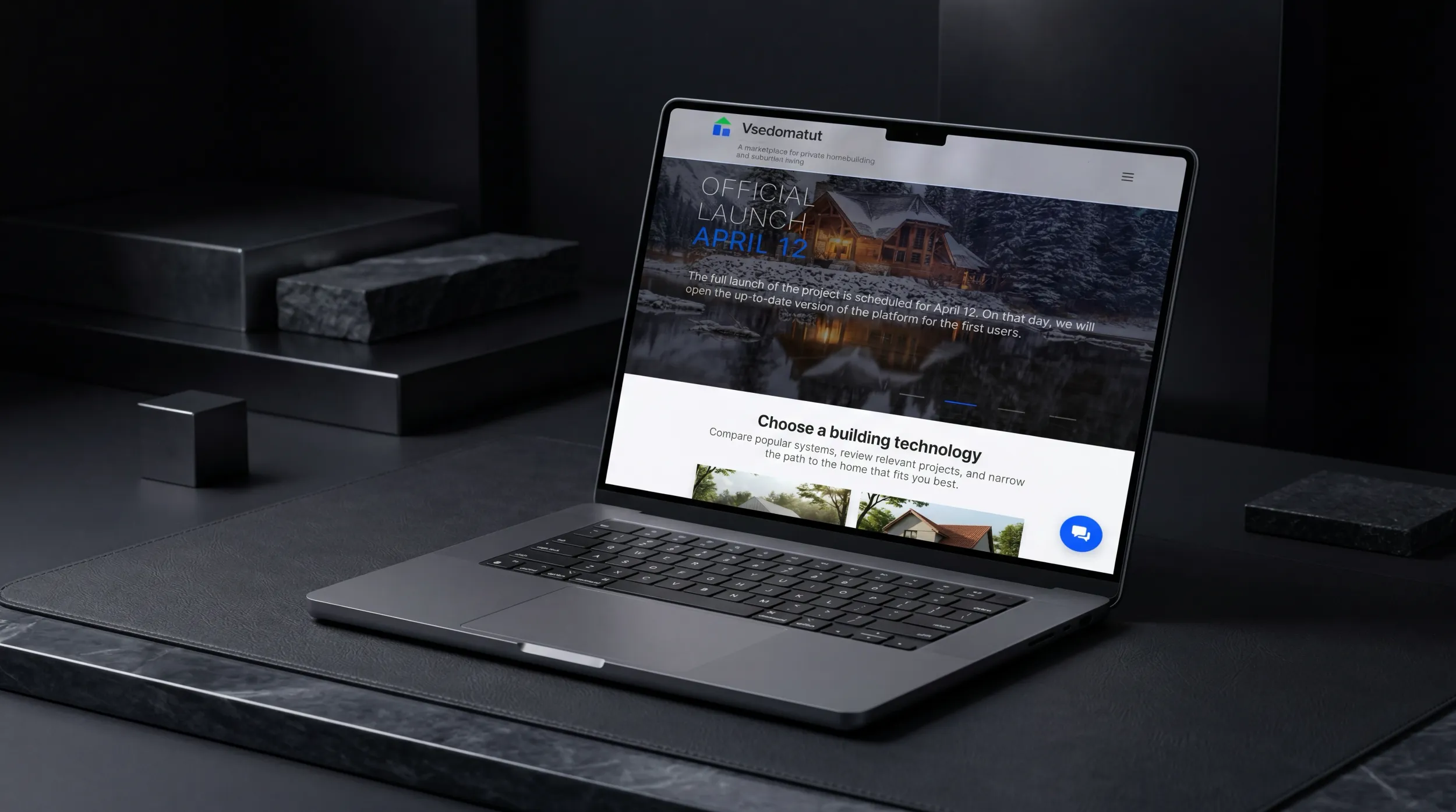
In one of our recent projects, we prepared a launch plan for a niche marketplace in the housing and construction space. The goal was not to build a giant ecosystem from day one. The goal was to fix a clear first working release: a clear storefront, structured listing pages, inquiry capture, a working sales flow, and a basic management area.
What we fixed at the start:
- Budget: a fixed budget for the first working release after agreement on its composition;
- Timeline: 4-6 weeks;
- Payments: 3 stages tied to the result of each stage;
- Format: prototype first, then interface build, then the server side and launch.
What should go into the first working release
This is the key point. When people hear “marketplace,” they often imagine dozens of roles, billing, complicated logic, and an endless backlog. In reality, the first working release can be much simpler and still useful to the business.
- A homepage with a clear explanation of the product and navigation by technology or category.
- Category pages where the visitor can choose the solution they need.
- Company and project cards with photos, specifications, layouts, and a clear next step.
- An inquiry form that goes straight into the team workflow instead of getting lost between inboxes.
- A management area so the client can update content without a developer for every change.
Even this composition already gives the business a working tool: traffic can be launched, inquiries can be collected, demand can be tested, and content can grow without the feeling that the real product “has not started yet.”
Why the project was split into three stages
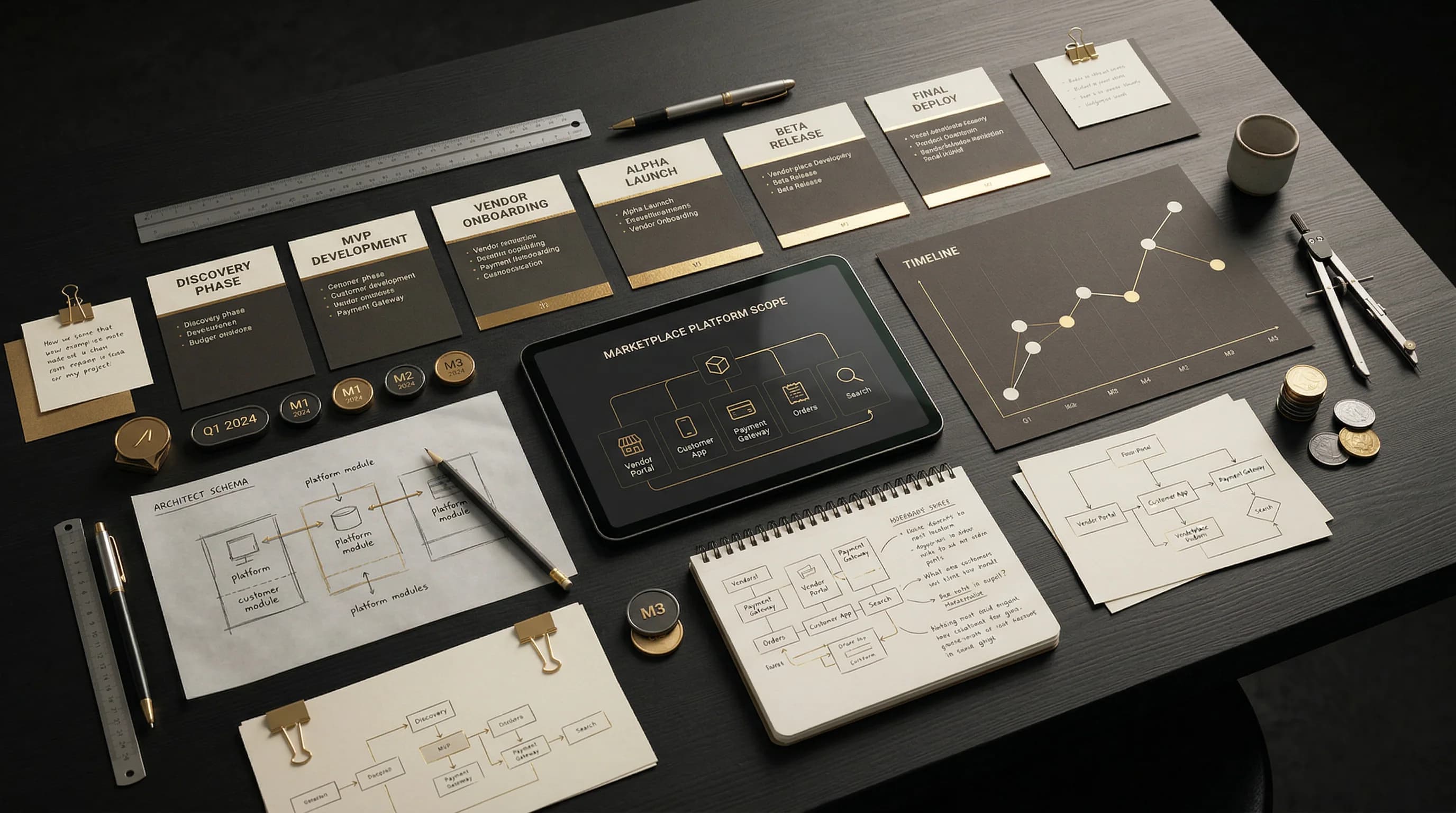
The healthiest model for this kind of task is neither full payment upfront nor one long tunnel until the end. We split the project into stages so the client could see the result after each step.
Stage 1. Prototype
First we fix the structure, the draft screen map, the main elements, and the overall visual direction.
Paid after approval
Stage 2. Interface build
Then we assemble the key pages, components, responsive behavior, and performance of the first version.
Paid after the interface part is ready
Stage 3. Server side and launch
After that we connect the data, request handling, the management area, and bring the project to a working launch.
Paid after launch
This split is useful for both sides. The client understands what they are paying for at each stage, and the team does not drag unapproved decisions into development.
What happens at each stage
1. Prototype and design
This is not just “making it look good.” At this stage we fix the page structure, the behavior of key blocks, the inquiry flow, the visual direction, and everything that affects the next development decisions.
2. Interface build
Here the project becomes a real interface: site header, cards, category pages, company and project pages, inquiry forms, responsive behavior, and loading speed.
3. Server side and launch
The final stage turns the site into a working business tool: data connections, the management area, request routing, domain, secure connection, and final testing.
What matters in the technical side, in plain language
Yes, behind the scenes there is a modern stack, a database, file storage, and a connection to the sales workflow. But for the client, the consequences of these decisions usually matter more than the list of technologies.
What this gives the business
- The site loads fast and works properly on mobile.
- Inquiries go straight into the sales workflow instead of getting lost between email and messengers.
- Content can be managed through the management area without code edits.
- There is a base that can be expanded in the next stage instead of rebuilt from scratch.
Why this already matters at launch
- The first version does not fall apart after the first real inquiries.
- Marketing and sales get a working tool instead of a mockup.
- The client does not become dependent on a “temporary” format that must be thrown away later.
- The project can be defended in clear terms: timeline, stage, result, and next step.
What happens after launch
Another important part of a launch plan is not leaving the client alone with the product after publication. In this project, handoff, training, and the support model were fixed separately.
- The client gets the management area and can update technologies, companies, projects, and banners on their own.
- The team records instructions and runs a live handoff session.
- The technical side can remain with the development team: server, backups, secure connection, updates, and fixes.
- After that, the project can move calmly into the next stage if the business needs new functions.
What may go into the next stage
This is exactly the zone that should not be dragged into the first working release at any cost. After launch, the product can grow step by step, once there is already traffic, inquiries, and feedback from the market.
- Account areas for partners or companies.
- Paid promotion of listings and additional commercial scenarios.
- Favorites, comparison, mortgage calculator, and deeper analytics.
- Integrations with maps, chatbots, a mobile app, and other scaling layers.
Main takeaway
A marketplace does not have to be a chaotic six-month project without clear logic. If the first working release is defined honestly at the start, the budget, timeline, stages, and working result can all be fixed before launch.
This is exactly the approach that matters to us: first assemble a clear first stage, then grow the product further. That is how custom development stops feeling scary and becomes manageable.
Need a clear launch plan for your marketplace or platform?
We can help break the project into a first working release, stages, timeline, and a clear budget without overcomplicating the start and without empty promises.