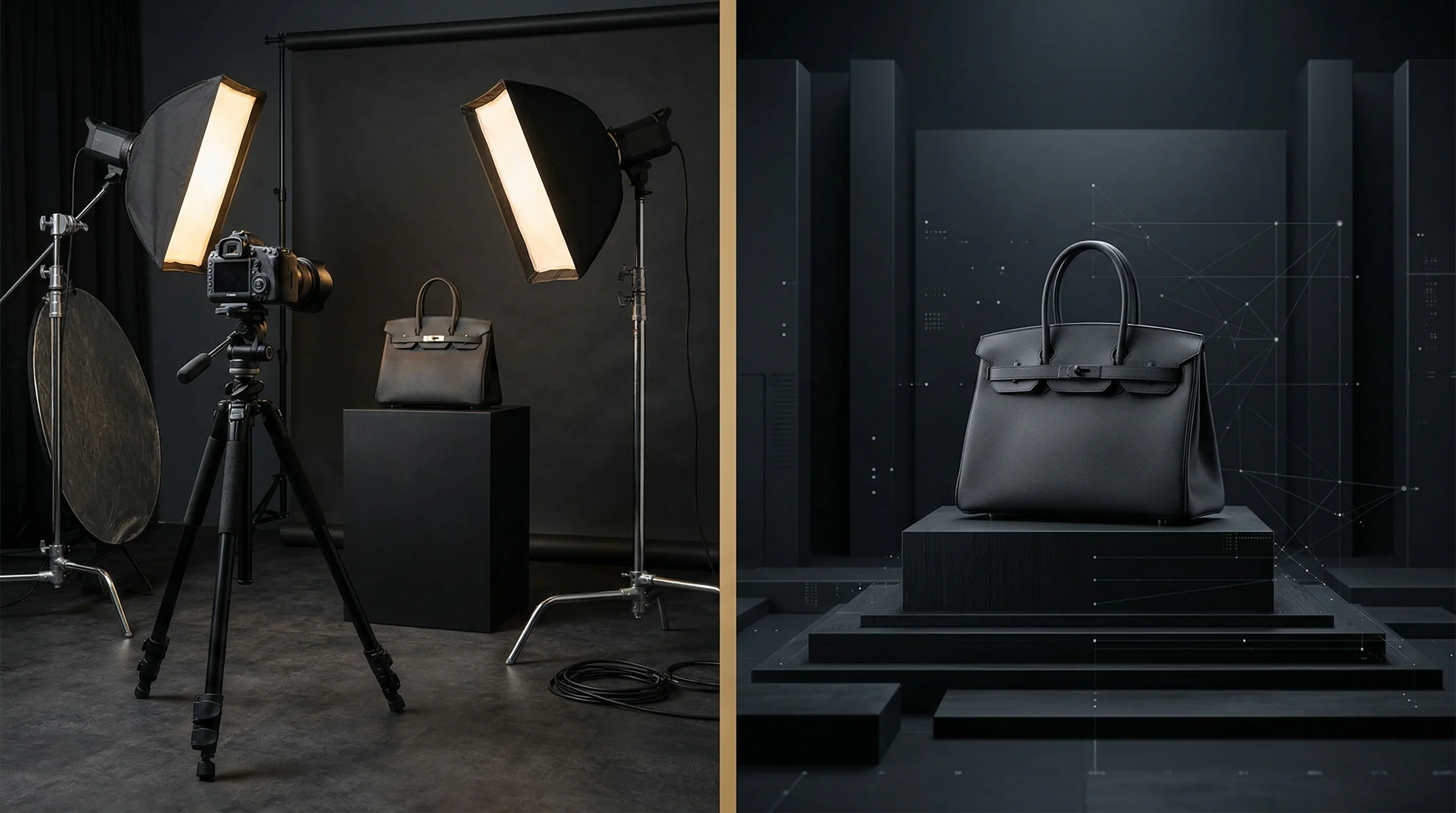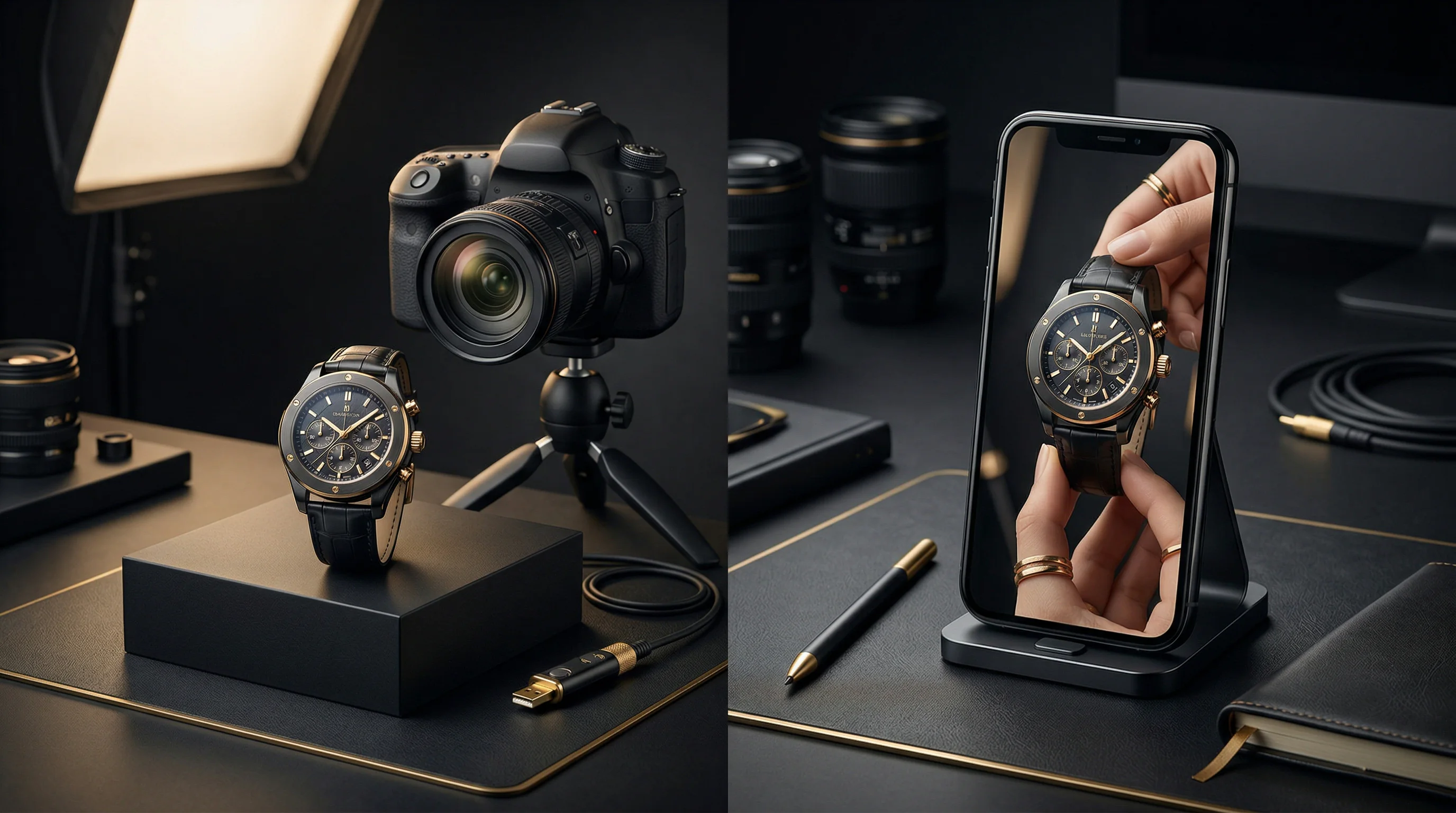
When a product needs video and when strong photography is enough
Video is not necessary for every product and every page. It becomes useful when photography leaves important customer questions unanswered: how something fits, how the material moves, or what the product looks like in use.
That is why the better question is not "do we need video at all?" It is this: in which situations does video really help the sale, and where does strong photography already do the job?
When photography is already enough
- The product is simple and easy to understand without movement.
- The buying decision depends mostly on price, specs, and strong still images.
- There is no complex fit, texture, or usage flow that has to be explained through motion.
- The team is limited on time, and building a strong photo base is the more important first step.
In these cases, video can still be useful, but it is not always the first place where the launch budget should go.
When video starts paying for itself
Apparel and fit
If customers need to understand how an item moves, sits, and feels in real use, short video removes doubt faster than any written description.
Texture and detail
Material, hardware, finish, and transformation often read better in motion than in a static frame.
Usage scenario
When a product needs to be seen in action, video explains it faster: how it opens, fits, moves, or works.
Launch pages and ads
In short advertising formats and the top section of a page, video can hold attention longer than a still image in the first second.
Which video formats tend to work best
The most useful approach is not "shoot something beautiful". It is choosing the format that answers a real customer objection. These are the formats that usually work for websites, product pages, and campaigns.
1. Walkthrough or short movement shot
Helps show fit, silhouette, and proportion. Especially useful for apparel, footwear, and accessories.
2. Detail close-up
Useful when the material, stitching, hardware, or tactile quality of the product matters to the sale.
3. Usage demonstration
Works for products that need to be seen in action: how they open, attach, transform, or behave in a real setting.
4. Short campaign cutdown
Designed not for full explanation, but to catch attention quickly in an ad, a launch page, or a short-form placement.
How one video can work across several channels
Good video content is valuable because it does not have to live in only one place. One strong shoot can be split into several useful assets without separate production for each channel.
- A short cut can go into paid ads and short-form placements.
- Longer fragments can support the top section of the homepage or launch pages.
- A calmer segment can work inside the product page to show movement.
- Selected frames can become still assets for banners and product cards.
How to decide whether you need video
The most useful question is simple: what doubts remain after the photos? If photography already explains shape, texture, and context, there is no need to force a video layer. If important questions remain, video often becomes the shortest bridge to purchase.
- Customers keep asking how it fits or looks in motion.
- The product sells better through demonstration than through description.
- You need a stronger opening visual for a campaign or a launch.
- The photo set is good, but it still does not make the product feel real enough.
Conclusion
Video does not replace strong photography, and it should not be added just to tick a box. But where the product needs to be understood in motion, video helps remove doubt and build trust faster.
The better approach is always the same: start with the business task, then choose the format. Sometimes photography is enough. Sometimes a short video is the clearest way to explain why the product deserves to be bought.
Need to understand where video will actually help your product?
We can review the task and tell you whether you need a full video layer, a short launch format, or simply a stronger photo base at the first stage.